Cacoon or Cocoon: Which Spelling is Correct?
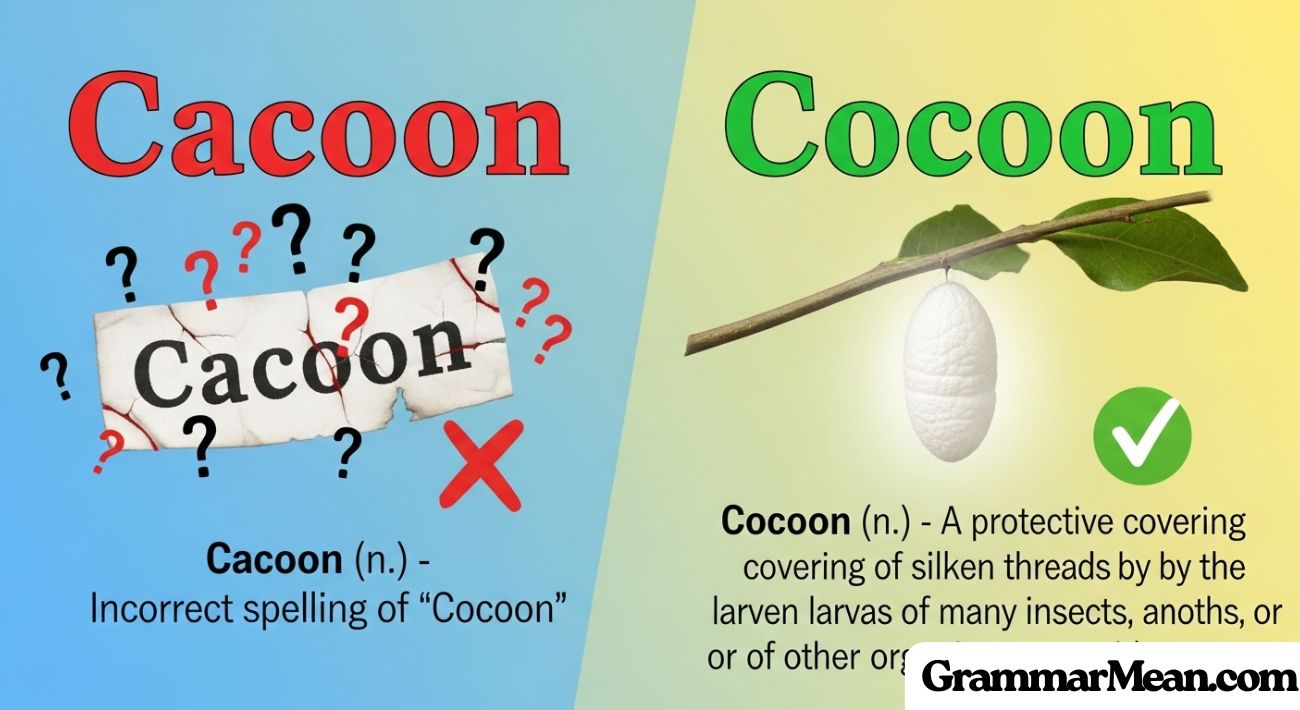
“Cacoon or cocoon” is a common spelling confusion. A cocoon is the silky case insects make during transformation. Cacoon, on the other hand, refers to a medicinal plant, not an insect shelter.
Have you ever wondered which spelling is correct? You’re not alone. Many people search for the answer every day.
Cocoon is used in science, nature, and even in stories. Cacoon is mostly known in herbal medicine. Both words look similar, but their meanings are different.
The Root of Confusion: Why Do People Mix Up Cacoon and Cocoon?
It’s very common to find spelling confusion in English, especially when words look alike and are pronounced the same way. This is exactly what happens with cacoon and cocoon. Both words have the same sound, and both start with “c” and end with “oon”. The only difference is the middle vowel — “a” vs “o”.
The English language also has many words that are spelled differently yet have the same sound. So when someone asks, “Is cacoon a word?“, the answer is yes, but it’s almost always a cocoon spelling mistake when referring to insect life. The real reason why people make this mistake is that English spelling doesn’t always follow clear rules. For example, why do we have “balloon” with double “o”, but “salon” with just one? These unpredictable spellings lead to confusion.
Cocoon: The Correct Spelling and Its Rich Meanings

The correct spelling is cocoon, and this word has many interesting uses. The most common cocoon meaning describes the soft, silky protective covering that some insects make around themselves while they change from a larva into an adult. This process is important in nature and is called butterfly metamorphosis.
In everyday English, the word cocoon can also be used in a cocoon metaphor meaning. We use it to talk about a place or situation that feels safe and protected. For example, people may say, “She wrapped herself in a cocoon of comfort,” meaning she surrounded herself with things that made her feel safe.
Cocoon Definition in Entomology
In the scientific world, especially in cocoon in entomology, a cocoon is a protective casing in insects such as moths and some butterflies. The cocoon transformation process is simple but amazing. First, the insect uses its silk gland in caterpillars to produce silk. Then, it wraps this silk around itself carefully until a soft shell forms around its body. Inside the silkworm cocoon, the insect goes through butterfly metamorphosis. It changes completely, and when it’s ready, it breaks out as a beautiful adult.
It is important to understand that not all insects make cocoons. Some have hard cases called chrysalises instead, which leads to questions like cocoon vs chrysalis. While the cocoon is made of silk and is formed by the insect, the chrysalis is the hard outer layer that already forms on some insects naturally.
The Science Behind Cocoon Formation
The way cocoons are made is truly a miracle of nature. The most well-known example is the silkworm cocoon, which humans have used for thousands of years in the silk production process. Silkworms spin their cocoons over several days. Each cocoon can be made from one continuous thread that stretches hundreds of meters. This silk thread is later collected and used to make clothing and other fabric products.
The formation of cocoons is a remarkable example of nature’s biological defense mechanisms. While in the cocoon, the insect is vulnerable. The cocoon protects it from predators, weather, and other dangers. This is one of the reasons why cocoons are so important in nature.
Cocoon in Metaphorical Context
Outside of science, the word cocoon has become a popular metaphor. People use it to describe a period of self-growth or personal transformation. For example, someone may say, “I need to cocoon for a while,” meaning they want to stay alone or in a safe place to grow emotionally or mentally. Just like an insect turns into something beautiful, we also hope to transform into our best selves.
The term is also used in psychology and literature to talk about emotional protection or safe spaces. Because of its positive and comforting associations, the idea of a cocoon shows up a lot in stories, poems, and even in personal care product descriptions.
Cocoon in Popular Culture
The word cocoon in popular culture appears in movies, music, and books. There is a famous American movie from the 1980s called Cocoon, which explored themes of aging and rejuvenation. Musicians also use the word in song lyrics, hinting at comfort, change, or protection. Even in fashion and design, the idea of a cocoon coat or cocoon chair represents something warm and comforting.
Whether it’s language, art, or personal transformation, the cocoon has become a symbol of beauty and change in many areas of life.
Cocoon in Technology and Design
Designers and architects often look to nature for inspiration. In the world of technology and design, cocoons have inspired innovations like cocoon-shaped furniture and sleep pods. These designs create a sense of privacy and comfort, much like a real cocoon encloses and shelters a caterpillar.
Even in modern biomimicry — where scientists study nature to solve design problems — the cocoon is seen as a perfect model for creating strong-but-lightweight structures. For example, space engineers may study cocoons to invent cocoon-inspired materials for creating new habitats on other planets.
Cacoon: The Misspelling and Its Unexpected Twist
Even though cocoon is the correct spelling for insect coverings, the word cacoon is not always wrong. If you write cacoon while talking about bugs, then yes, it’s a spelling mistake. But if you’re referring to a special plant, then cacoon is a real word.
This is where the confusion begins. While the difference between cacoon and cocoon is huge, many English speakers don’t know about the cacoon plant, also called the cacoon vine plant. This plant is completely different from the insect cocoon and belongs to the world of botanical terminology.
Cacoon as a Botanical Term
The cacoon plant, also known as Fevillea cordifolia, is a climbing vine found in tropical regions of Central and South America. It has large, round fruits with hard, flat seeds inside. These seeds have been used in traditional medicine, which makes cacoon traditional medicine an interesting topic to explore.
So, in short, the word cacoon is used in botany, not in entomology. That’s why it is accurate to say that cocoon is for insects, while cacoon refers to a plant.
Traditional Medicinal Uses of Cacoon
In the Caribbean and parts of South America, the cacoon medicinal plant has been a part of plant-based antidotes for centuries. People have used the seeds to treat everything from stomach problems to poisonous stings. Some communities grind the seeds into powder and mix them in drinks. Others use parts of the plant to help with inflammation or pain.
While science has not fully tested all these claims, this plant remains a part of traditional healing practices. This makes the cacoon vine plant not just a curious spelling exception but also an important cultural symbol.
Comparison Table: Cocoon vs. Cacoon
| Feature | Cocoon | Cacoon |
| Field of Use | Entomology | Botany |
| Meaning | Silk case made by insects | Tropical plant with hard seeds |
| Common Spelling | Yes, correct spelling of insect casing | Rare, only correct in plant context |
| Daily Usage | Very common | Rare, regional use |
| Example | Butterfly spins a cocoon | Healers use seeds from the cacoon plant |
The Impact of Misspelling: Why Correct Spelling Matters
Using the right word matters in writing. If you misspell cocoon as cacoon while talking about insects, readers may get confused. It’s important, especially in schools, business settings, or when writing online, to use the correct spelling of cocoon. Mistakes like these can hurt the clarity of your message and may make your writing seem less careful.
This is especially true in the world of search engines. If someone types “cocoon spelling” into Google, they will likely find information about insects. But if your text includes the wrong spelling, it may not show up in the right search results.
That’s why it’s important to understand when to use each word. Use cocoon for insects and cacoon only when you mean the plant.
Read Also : What is the Plural of Chief? Chiefs or Chieves?
Fascinating Facts About Cocoons in Nature

Cocoons exist in many different shapes, sizes, and textures in the natural world. Some caterpillars make fluffy, white cocoons, while others make hard ones that look like wood. These tropical seed pods made from silk allow insects to survive through winter or harsh weather conditions.
Not all cocoons are soft. Some species build cocoons using leaves or bits of wood, weaving them together with silk. This helps them stay hidden from predators. Some small insects even create their cocoons underwater.
Another amazing fact is that some cocoons are built by multiple insects at once. These shared shelters protect several pupae at the same time.
The Evolutionary Significance of Cocoons
Insects developed cocoons as a way to survive. A soft-bodied caterpillar is defenseless on its own, but when it wraps itself in silk, it gains a powerful shield. Over millions of years, this helped insects grow, spread, and survive in many different environments. The cocoon is an example of how nature often finds simple but effective ways to protect life.
Cocoons also allow insects to stay hidden, to conserve energy, and to develop safely into adults. Without cocoons, many species would not have survived predators or changing climates.
Tips for Remembering the Correct Spelling
One easy way to avoid cocoon spelling mistakes is to focus on the double “o”. Remember that cocoon has two o’s in the middle, just like the word “moon” or “spoon”. You can also remember a simple rhyme: “The butterfly swoons in the cocoon under the moon.” The two “o”s will help you remember.
Another helpful trick is to link the spelling with what it means. Both “cocoon” and “balloon” have double o’s, and both refer to something rounded or enclosed. This is why we call such spelling the double o spelling words rule.
Case Study: The Silk Industry and Cocoons
One of the most well-known uses of cocoons in human history is in the silk industry. Millions of silkworm cocoons are harvested every year to make silk — a material that feels smooth and shiny and is used to make high-end clothing and bedding.
The silk production process begins with farmers raising silkworms until they spin their cocoons. These cocoons are then boiled, which allows the silk threads to unravel. These threads are then woven into silk fabric.
China and India are the largest producers of silk, but the United States imports large quantities of silk clothing and textiles. Modern changes in the industry now include the creation of cruelty-free silk, where the moths are allowed to emerge before the silk is harvested.
This case study shows how a tiny insect’s cocoon can create a huge impact on human fashion and economy.
The Future of Cocoon-Inspired Technology

The life cycle of a caterpillar has inspired many new inventions. Scientists study cocoons to build safer protective materials and better shelters. Engineers have developed new cocoon-inspired structures for spacecraft, tents, and even housing projects.
In medicine, doctors hope to use cocoon-like materials for drug delivery systems. These systems could safely carry medicine inside the body and release it where it is needed. In the future, using inspiration from cocoons could lead to new technology in eco-friendly packaging, wearable tech, and aerospace design.
The Root of Confusion Between Cacoon and Cocoon
Many people get confused between “cacoon or cocoon” because of how similar the words look and sound. The spelling confusion in English often comes from double-letter words, especially double O spelling words like “book,” “moon,” and “cocoon.” People may mistakenly type “cacoon” because it follows the sound more closely than the correct spelling.
Another reason behind the mix-up is that “cacoon” is sometimes used as a botanical term, which makes people think it’s correct in general usage. But when it comes to insects and the protective house they build during butterfly metamorphosis, the correct spelling of cocoon always uses two O’s in the middle. Knowing when to use each spelling is key.
Cocoon: The Correct Spelling and Its Meaning
The word “cocoon” refers to the silky protective case made by some insects, especially during transformation. This cocoon definition in entomology connects to how caterpillars protect themselves while turning into butterflies or moths. It’s part of a natural cocoon transformation process that takes place in several species and is vital for survival and development.
In everyday English, the word “cocoon” is also used as a metaphor, as in “a cocoon of safety.” This cocoon metaphor meaning refers to a safe space we build around ourselves. From comfort to transformation, the word holds strong symbolic value. Using “cocoon” instead of “cacoon” allows writers and speakers to connect with both scientific and emotional meanings.
Cacoon: Not a Spelling Mistake, But a Different Word
While cacoon may seem like a cocoon spelling mistake, it’s actually a word with a different meaning. “Cacoon plant” refers to a tropical vine known for its medicinal use. Found in parts of the Caribbean, this cacoon vine plant produces seed pods often used in traditional remedies.
Though cacoon is not a correct spelling for the insect shelter, it is real in botanical terminology. People searching “is cacoon a word” are often surprised to learn it exists in this different context. But outside of botany or cacoon traditional medicine, it’s best to stick with “cocoon” to avoid confusion in English writing or research.
The Evolutionary Importance of Cocoons
In nature, a cocoon in entomology is more than a random shelter. It acts as a biological defense mechanism, protecting vulnerable insects like butterflies and moths during critical life stages. The silk gland in caterpillars releases a strong, stretchy material that creates the cocoon’s outer layer.
This process isn’t just a survival trick—it’s a key part of evolutionary success. Without cocoons or similar protection, many insects wouldn’t survive their transformation. Whether it’s a silkworm cocoon used in the silk production process or the fragile chrysalis of a monarch butterfly, cocoons are essential for life cycles and provide valuable insight for biologists today.
Cocoon vs. Chrysalis: Not the Same Thing

Many people mix up the terms cocoon vs chrysalis, thinking they are interchangeable. However, a cocoon is made of silk and wraps around a caterpillar, while a chrysalis is a hardened body part where a butterfly forms. Both involve transformation, but they are distinct stages in nature.
The cocoon refers mostly to moths and other silk-spinning insects, while chrysalises are linked to butterflies. So while the cocoon meaning relates to silk encasement, a chrysalis is more like a hardened shell. Understanding this helps avoid word misuse in English and adds depth to conversations about insects and their fascinating life cycles.
Cocoon in Popular Culture, Tech, and Design
The word cocoon in popular culture often describes a place of rest, protection, or transformation. In movies or books, characters retreat into a “cocoon” for emotional healing or change. This reflects how the natural process relates to human growth. It’s a powerful storytelling device tied to rebirth or safety.
In modern design and cocoon in technology, the term inspires products like office pods, sleeping bags, and cars with protective shells. Technology brands even use the term to evoke innovation and security. This expanded meaning shows how one natural term rooted in protective casings in insects can evolve into many creative areas—from furniture to tech gear.
Why Correct Spelling Matters: Cocoon vs. Cacoon
Getting the difference between cacoon and cocoon right matters, especially in writing or research. A misspelling like “cacoon” where “cocoon” is required can hurt credibility and confuse your message. Using the proper word clarifies whether you are talking about insects or a plant-based antidote from a seed pod.
In school, business, or science, knowing the correct spelling of cocoon helps build trust and shows attention to detail. Even in casual writing, spelling words right avoids embarrassment and miscommunication. With a term used in science, art, and healing, using the right form of cacoon or cocoon shows respect for both language and nature.
FAQs
What is the meaning of Cacoon?
Cacoon is a tropical vine plant with medicinal seed pods, not to be confused with “cocoon,” the silk case made by insects.
How do you spell cocoon in English?
The correct spelling is “cocoon,” with two O’s in the middle.
What exactly is a Cacoon?
A cacoon is a Caribbean medicinal plant whose dried pods are used in herbal remedies.
How do you hang a Cacoon?
To hang a Cacoon swing or chair, secure it to a strong beam or tree branch using durable rope or a certified carabiner.
Conclusion
Understanding the difference between cacoon or cocoon means more than just spelling. It opens a window into the world of insects, plants, culture, and technology. Remember, cocoon is the correct spelling when talking about insects, but cacoon does have a valid place in botanical terminology.
Being aware of this difference can help you write more clearly, think more deeply, and appreciate the beauty of nature and language working together.