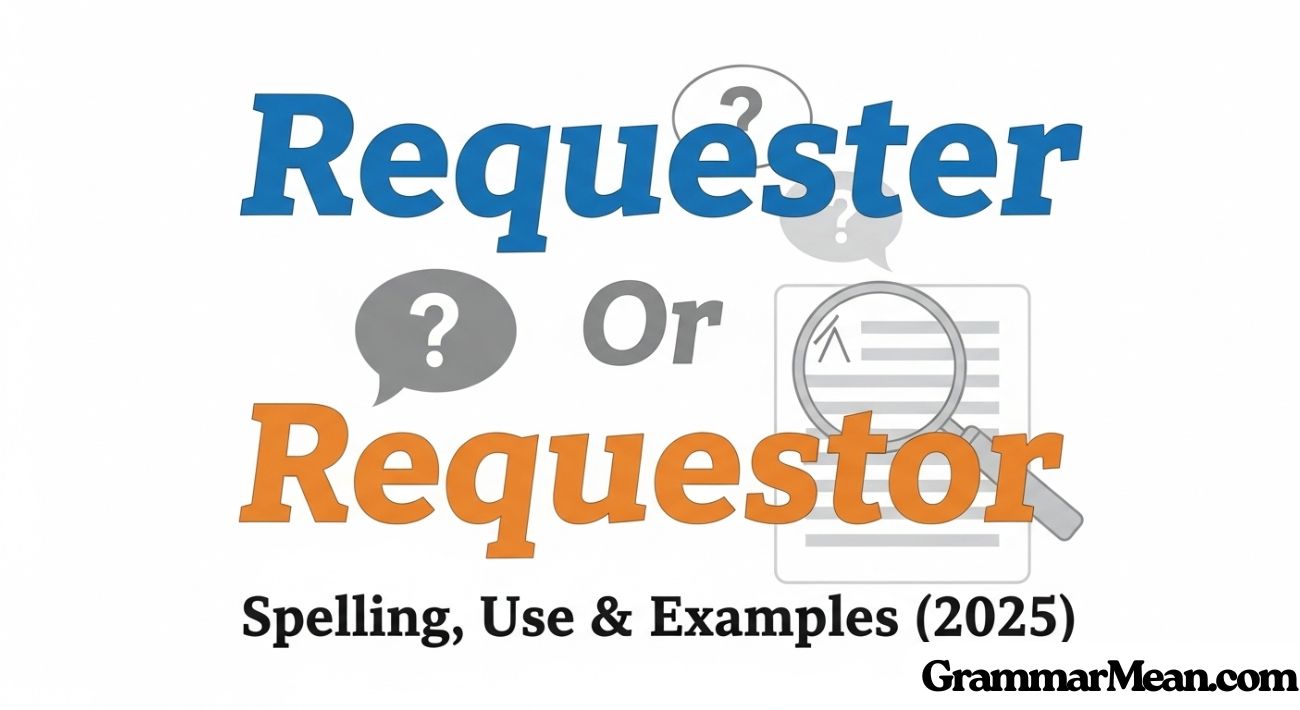
Requester Or Requestor: Spelling, Use & Examples (2025)
A requestor or requester is a person who asks for something formally. They make a request in business, emails, or legal documents. Both words refer to the same role but are used in different contexts.
Many people get confused between requestor and requester. Choosing the wrong word can make writing look unprofessional. Understanding the difference helps you write clearly and correctly.
Requester is more common in business and daily communication. Requestor appears mostly in legal or technical documents. Using the right term makes your writing easy to read and professional.
What Do “Requester” and “Requestor” Mean?

Both requester and requestor refer to a person making a request, usually in a formal or official context. A requester is someone who submits a request in day-to-day business emails or office communication, while a requestor is often found in legal documents or formal technical systems. Understanding the requester meaning and requestor definition is the first step in using the correct term.
For example, in a workplace, you may see an email saying, “The requester asked for the project update by Friday.” Meanwhile, a legal contract may include the sentence, “The requestor in legal documents must submit all relevant forms before approval.” Both words identify the role of the person initiating the request, which is why grasping their meaning ensures accurate communication.
In essence, the formal request process involves a person making a request, who could be referred to as either a requester or a requestor, depending on context.
“Requester” vs “Requestor”: What’s the Real Difference?
The requester vs requestor difference is primarily about usage rather than meaning. Both words describe someone who makes a request. The difference lies in tone, context, and region. Requester is more widely used in everyday US English, especially in office communication, emails, and IT support tickets. On the other hand, requestor vs requester usage shows that requestor appears more often in legal or formal technical writing, often giving a more official or legalistic tone.
For instance, a business email might read, “Please notify the requester once the task is complete,” whereas a legal document could state, “The requestor agrees to comply with all terms outlined herein.” The choice between the two is mostly stylistic, but sticking with requester in business emails keeps communication smooth and natural.
Which One Is More Common: Requester or Requestor?
In the United States, requester is far more common across business, academic, and government communication. Style guides, corporate writing manuals, and professional writing standards consistently prefer requester for general use. Requestor, while still correct, is niche and tends to appear in specific industries, such as law, IT support, or formal compliance documentation.
A simple analysis of online usage shows that requester in business emails appears in thousands of corporate templates, support tickets, and email exchanges. Meanwhile, requestor in legal documents is restricted to contracts, IT service requests, and other formalized processes. For clear communication and readability, requester is usually the safer choice unless your audience expects legal or technical precision.
Is “Requestor” Correct English? Debunking the Myth
Many writers wonder if “requestor” is proper English. The answer is yes. It is grammatically correct, and the requestor definition confirms it as a valid alternative. However, its usage is specialized. Requestor in legal documents is standard because the Latin-rooted suffix -or gives a more formal tone, similar to words like “actor” or “creditor.”
Even though it is correct, requestor vs requester usage can be confusing if placed in everyday business communication. Using it outside legal or technical contexts may make your writing seem unnecessarily formal or old-fashioned. For example, writing, “The requestor will be updated on the shipment” in a casual email feels awkward. In contrast, “The requester will be updated on the shipment” is natural, readable, and professional.
Choosing the Right Term for Your Writing
Selecting between requester and requestor depends on context, audience, and document type. In most situations, like business emails, reports, or customer service communication, requester is clearer and more familiar. In formal contracts or legal paperwork, requestor may be required for official requestor roles.
Consider the tone of your writing. If the goal is email communication clarity or smooth business correspondence, stick with requester. For example, a help desk email might say, “Please inform the requester about the ticket status.” Conversely, a compliance form could state, “All submissions by the requestor must meet legal requirements.” Knowing your audience is crucial in making this decision.
Examples in Context: Real-Life Usage
Seeing these words in context often clarifies which to use. In office environments, requester is everywhere:
“The requester submitted the annual report late.”
“Please notify the requester if the meeting is rescheduled.”
In legal or technical contexts, requestor is preferred:
“The requestor must provide identification before accessing confidential files.”
“All forms submitted by the requestor are logged for auditing purposes.”
These examples illustrate that both spellings are correct, but their usage is dictated by context and formality.
Requester Examples
In daily business and IT environments, requester is the default. A corporate help desk might record: “The requester reported a software issue yesterday.” A manager might email, “Please update the requester about the project deadline.” These sentences emphasize clarity and readability for the general audience and reflect professional writing tips for smooth communication.
Requestor Examples
Requestor appears in legal documents, IT forms, and technical systems. For example: “The requestor must provide proof of identity before proceeding.” Legal contracts may read, “The requestor shall comply with the outlined terms.” Here, the word reflects a formal or official tone that aligns with the formal request process or legal terminology usage.
Can You Use “Requestor” in Business Communication?

While technically correct, using requestor in everyday business emails can feel overly formal. For most US workplaces, it is better to use requester in business emails for email communication clarity. Saying “The requestor has submitted the request” may be grammatically fine, but it can confuse readers who are used to simpler, more direct phrasing. When writing for casual, client-facing, or internal communications, clarity and familiarity should take precedence over formality.
Origins of the Words “Requester” and “Requestor”
Both words derive from the verb “request,” meaning to ask for something formally. The difference lies in the suffix. Requester follows standard English rules by adding -er, similar to words like teacher or writer. Requestor, using -or, has Latin roots and is common in formal and legal contexts, similar to actor or creditor.
This subtle distinction explains why requestor in legal documents sounds more formal, while requester is simpler and more universal.
Regional Differences: US vs UK vs International Use
In the United States, both forms are recognized, but requester dominates daily use. UK English also favors requester, while requestor remains mostly legal or formal. International organizations, such as the UN, EU offices, and global tech companies, typically stick with requester to maintain clarity and readability.
This regional distinction highlights why understanding requestor vs requester usage is important for international communication.
Read Also : 30 Other Ways to Say “Sorry for the Short Notice in an Email”
The Evolution of “Requester” and “Requestor” in Modern English
Historically, requestor appeared in legal and automated IT systems, such as help desk software. Over time, the trend shifted toward requester, reflecting modern business and digital communication practices. Today, in reports, emails, and corporate templates, requester is more readable and accessible, while requestor remains in niche formal contexts.
For example, an older IT system may display: “The requestor ID is invalid,” while modern reports would say: “The requester has escalated the issue.” This evolution shows how language adapts to user-friendliness and audience expectations.
How to Use “Requester” and “Requestor” in Formal Writing
In formal writing, consider tone, audience, and style guides. Requester is appropriate for general business writing, internal reports, and email communication, while requestor is suited for legal documents, contracts, and compliance forms. Always maintain consistency throughout a document. Avoid mixing requester and requestor in the same text, as it can appear unprofessional.
Example: “The requester shall receive a response within five business days” versus “The requestor shall submit all supporting documentation before approval.
Pronunciation and Spelling: Requester vs Requestor Explained
Both words are pronounced similarly, /ri-ˈkwes-tər/, making them easy to confuse in speech. The difference is visible only in writing. Proper spelling ensures clarity, particularly in professional and technical environments. Using requester is generally easier for readers to recognize, while requestor might be seen as overly formal or technical.
Top Mistakes People Make Using Requester and Requestor
Common mistakes include mixing both spellings in a single document, using requestor in casual emails, or applying the wrong word in IT or legal systems. A consistent approach improves email communication clarity and aligns with professional writing tips. Always consider the audience and purpose of your writing to avoid confusion.
Synonyms of the Word “Requester”
Sometimes it helps to vary your wording. Synonyms for requester include applicant, petitioner, submitter, and seeker. For instance, in a form, you could write: “Each submitter must include full contact information.” In a legal or government context, “The petitioner filed the request on time” works well. Choosing appropriate synonyms enhances business writing vocabulary and keeps your text engaging.
Popular Alternatives to Requester and Requestor
Modern workplaces often prefer simpler, action-oriented alternatives such as user, client, or participant. In software or IT, “The user submitted a password reset request” works well. Academic research or workshops may say, “Each participant must register in advance.” While these do not replace the formal meaning entirely, they improve clarity in digital and everyday professional communication.
What Do “Requester” and “Requestor” Mean?

Both requester and requestor refer to a person making a request. A requester is someone who asks for something in everyday business emails, reports, or IT support tickets. A requestor, on the other hand, often appears in legal documents or technical systems where formal processes are required. Knowing the requester meaning and requestor definition ensures your writing stays clear.
For example, a help desk might say, “The requester submitted a ticket yesterday,” while a contract might read, “The requestor in legal documents must provide identification.” Understanding these differences helps maintain email communication clarity and ensures readers immediately recognize the role of the official requestor role.
“Requester” vs “Requestor”: What’s the Real Difference?
The requester vs requestor difference is subtle and mostly contextual. Both words describe the same role, a person making a request, but the choice of word affects tone. Requester feels more approachable and is preferred in everyday US business communication, while requestor conveys formality, often seen in legal or technical contexts.
For instance, in business writing, “The requester submitted the report on time” is smooth and natural. In legal or technical documents, “The requestor must comply with all policies” highlights compliance and formal obligations. Recognizing requestor vs requester usage ensures professional writing standards and clear formal request terminology.
Which One Is More Common: Requester or Requestor?
In the United States, requester is far more common than requestor. Corporate emails, reports, and customer service forms almost always use requester in business emails, while requestor is reserved for legal documents or IT ticketing systems. This prevalence reflects modern business writing vocabulary and preference for reader-friendly language.
For example, a company email might read, “The requester will be notified when the order ships,” whereas an IT system may log, “The requestor in technical documentation submitted a request.” Using requester in general writing ensures clarity and aligns with professional writing tips for modern business communication.
Is “Requestor” Correct English? Debunking the Myth
Yes, requestor is correct English, though less common. Its Latin-rooted suffix -or gives it a formal or technical tone, which is why you often see requestor in legal documents or automated systems. While it is grammatically correct, using it in casual business emails can feel awkward and unnecessarily formal.
For instance, a legal contract may state, “The requestor shall submit all necessary documents,” while an office email prefers, “The requester asked for a status update.” Understanding this distinction helps maintain email communication clarity and avoids misusing formal terminology in everyday writing.
Choosing the Right Term for Your Writing
Selecting between requester and requestor depends on audience and context. For emails, reports, and general business communication, requester is preferred. It’s more readable and accessible for most US audiences, keeping email communication clarity intact. For legal contracts or IT systems, requestor may be required for official requestor roles.
For example, a customer service email could say, “Notify the requester about ticket updates.” A legal form might say, “The requestor must sign before processing.” Choosing correctly ensures professional, polished writing and aligns with formal request terminology standards.
Examples in Context: Real-Life Usage

In practical office use, requester dominates. Emails like “The requester submitted a project proposal yesterday” or IT updates saying, “The requester will receive confirmation shortly” illustrate everyday usage. These examples emphasize clarity and professional communication.
Meanwhile, requestor appears in legal and technical contexts. Contracts might read, “The requestor agrees to the outlined terms,” or compliance forms may state, “All requests submitted by the requestor are logged.” Context determines which term fits best, ensuring accurate formal request process and maintaining professionalism.
Synonyms and Alternatives for Requester
Several synonyms for requester enhance variety and clarity. Words like applicant, petitioner, submitter, and seeker work in formal or casual writing. For example, “The submitter completed the form on time,” or, in legal contexts, “The petitioner filed the request promptly.”
Modern workplaces also use alternatives like user, client, or participant to simplify communication. “The user requested password reset” or “Each participant must register” keeps writing accessible. Using appropriate synonyms maintains business writing vocabulary and reinforces understanding of the official requestor role.
FAQs
Which is correct, requestor or requester?
Both are correct, but requester is more common in general US and UK writing, while requestor is mainly used in legal or technical contexts.
What is the meaning of requestor?
A requestor is a person who formally makes a request, often in legal or official settings.
What do you mean by requester?
A requester is someone who asks for something formally, commonly in business, emails, or everyday communication.
How do you spell requestor in England?
In England, requester is preferred; requestor is less common and mostly used in legal documents.
Conclusion
The short answer is to use requester in most situations. It is more common in US business and everyday writing, easier to read, and keeps communication professional. Requestor remains correct but is mostly limited to legal documents, formal contracts, and technical IT environments.
Knowing the requester vs requestor difference, understanding requestor in legal documents, and applying formal request terminology ensures clarity, credibility, and professionalism in all your writing. Consistency and audience awareness are key in 2025 and beyond.