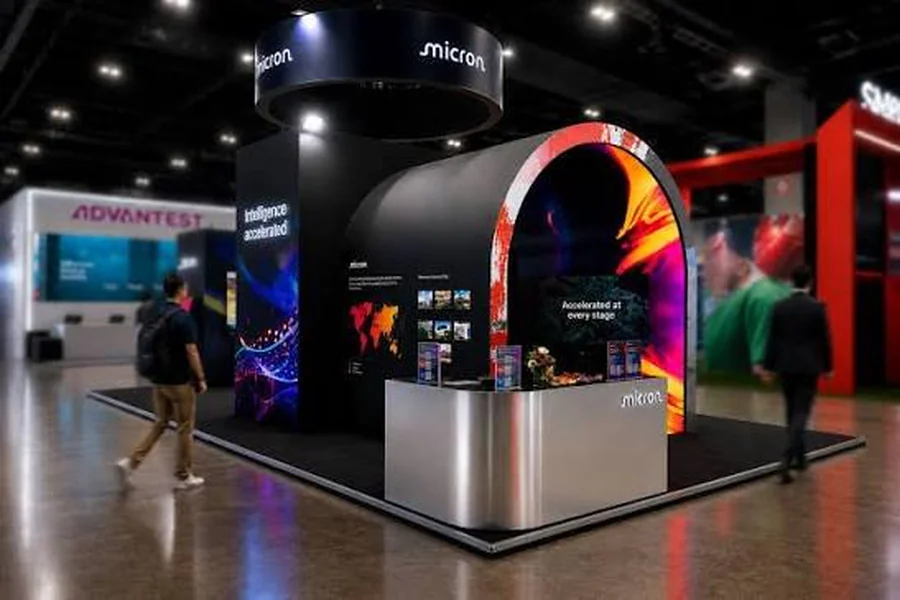
7 Exhibition Booth Design Trends Malaysian Brands Can Use in 2026
Exhibition booth design continues to change as brands look for better ways to attract visitors, control costs and create stronger physical experiences.
In 2026, the most effective exhibition booths are not necessarily the most complicated ones.
Current industry examples show growing interest in modular structures, reusable materials, digital interaction, flexible layouts and experience-led environments that combine strong branding with practical visitor flow. Recent exhibition design awards have also highlighted adaptability, interactivity and scalable modular systems as important qualities in modern booth design.
For Malaysian businesses preparing for local or international exhibitions, these trends can provide useful inspiration.
Here are seven exhibition booth design trends worth considering in 2026.
1. Modular Booths That Do Not Look Modular
Modular exhibition systems have been around for years, but the way they are being used is becoming more sophisticated.
Previously, modular booths were often associated with simple aluminium frames and standard panels.
Today, modular systems can support much more customised-looking environments.
They can incorporate:
- Large-format graphics
- Lightboxes
- LED screens
- Display counters
- Product shelves
- Branded structures
- Meeting areas
The advantage is flexibility.
A company may participate in several exhibitions with different booth sizes throughout the year.
Instead of producing a completely new structure every time, selected modular elements can be rearranged or reused.
This can help create a consistent brand identity while adapting to different exhibition spaces.
Recent industry recognition for portable and modular exhibitions also reflects this shift. Current designs are increasingly being judged not only on appearance but also on functionality, flexibility, messaging and marketing effectiveness.
2. More Reusable and Sustainable Materials
Sustainability is becoming increasingly connected to exhibition economics.
Trade show booths are temporary by nature, so single-use construction can create considerable material waste.
At the same time, exhibition costs continue to rise.
Industry analysis in 2026 has highlighted greater use of reusable structures, rental furniture, fabric graphics, LED lighting and modular systems as ways to reduce both waste and long-term exhibition costs.
For exhibitors, this may mean designing booths with selected components that can be reused across multiple events.
These could include:
- Aluminium frames
- Counters
- Lightboxes
- Furniture
- Flooring systems
- Digital screens
- Display structures
The visible graphics and branding can then be updated for each exhibition.
This approach can be particularly useful for Malaysian companies attending multiple trade shows throughout the year.
Rather than thinking about each booth as a one-time construction project, businesses can start viewing exhibition assets as part of a longer-term programme.
3. Bigger Focus on Interactive Experiences
Visitors increasingly expect to do something rather than simply look at printed graphics.
Interactive elements can turn a passive booth visit into a more memorable experience.
Examples include:
- Touchscreens
- Digital product catalogues
- Interactive product demonstrations
- QR-based experiences
- Games
- Product configurators
- Augmented reality
- Virtual reality
Recent award-winning exhibition projects have combined touchscreens, interactive displays and digital storytelling to allow visitors to explore information at their own pace.
This does not mean every booth needs expensive technology.
The interaction should support the brand’s objective.
For example, a manufacturer might use a touchscreen to allow visitors to explore product specifications.
A property developer could use an interactive masterplan.
A technology company might provide a live software demonstration.
The best interactive features make information easier to understand.
4. Large LED Displays Are Becoming Part of the Architecture
Screens are no longer always treated as separate pieces of equipment mounted onto a wall.
Increasingly, LED displays are becoming part of the booth structure itself.
This can create a much stronger visual presence.
LED screens can be used for:
- Product animations
- Brand storytelling
- Live demonstrations
- Corporate videos
- Motion graphics
- Event schedules
Large visual displays are particularly effective for businesses with products that are difficult to physically display.
An engineering company, for example, may use animation to demonstrate machinery that cannot be transported into the exhibition hall.
Interactive technologies, video walls and integrated LED systems continue to be widely used to create more immersive booth environments.
However, bigger is not always better.
The content still needs to communicate something useful.
A huge screen showing generic corporate footage may attract attention for a few seconds but fail to create meaningful engagement.
5. Open Booth Layouts Are Replacing Physical Barriers
Modern booths are increasingly being designed around openness and accessibility.
Large reception counters placed directly across the entrance can make a booth feel closed.
More open layouts allow visitors to enter naturally.
Recent exhibition projects have placed greater emphasis on open visitor flow and strategically positioned interaction zones rather than creating heavily enclosed frontages.
An open booth might use:
- Smaller reception counters
- Multiple entrances
- Central product displays
- Open demonstration areas
- Lounge-style meeting spaces
This type of layout can be especially effective for companies focused on lead generation.
Visitors are more likely to step inside when they do not feel that they are crossing a physical barrier.
6. Exhibition Booths Are Becoming More Like Hospitality Spaces
For B2B brands, exhibitions are not only about attracting large crowds.
Some of the most valuable interactions may involve a small number of decision-makers.
This is why more booths are incorporating hospitality-style environments.
These may include:
- Lounges
- Coffee areas
- Private meeting rooms
- Semi-private discussion areas
- VIP spaces
The objective is to create an environment where visitors can stay longer.
This is particularly relevant for industries such as aerospace, defence, technology, engineering and professional services where business conversations may require more time.
Touch Concept’s own chalet and hospitality projects reflect this approach, with spaces designed around meetings, guest comfort and business engagement rather than only visual presentation.
7. Brands Are Designing for Adaptability
One of the strongest themes in current exhibition design is adaptability.
A brand may attend an exhibition with:
- A 9-square-metre booth
- A 36-square-metre booth
- A large island booth
- An international pavilion
It is rarely practical to create a completely unrelated visual identity for every format.
Instead, companies are increasingly developing design systems that can expand or contract depending on the available space.
A consistent system might include:
- The same brand architecture
- Reusable lighting features
- Modular signage
- Repeatable display units
- Adaptable meeting areas
This creates greater consistency across exhibitions.
Recent modular exhibition examples have shown how adaptable structures can be scaled between different booth sizes without making the final environment look generic.
What These Trends Mean for Malaysian Exhibitors
Businesses do not need to adopt every exhibition trend.
The better approach is to identify which ideas support the actual purpose of the event.
For example:
If brand awareness is the priority:
Strong architecture, large graphics and LED displays may deserve more attention.
If lead generation is the priority:
Open entrances and accessible discussion areas may be more valuable.
If product education is important:
Interactive displays and demonstrations may work better.
If the company attends several exhibitions:
Reusable modular components may provide greater long-term value.
The design should always support the exhibition objective.
Avoid Following Trends Without a Purpose
A trend is only useful when it improves the visitor experience or supports the business objective.
Adding an interactive screen does not automatically make a booth more engaging.
Installing a large LED wall does not guarantee visitors will remember the brand.
Similarly, an elaborate architectural feature may consume a large part of the budget without contributing to sales or engagement.
Before adding a design feature, ask:
What will this help visitors understand or do?
If there is no clear answer, the feature may not be necessary.
Balance Technology With Human Interaction
Technology will continue to play a larger role in exhibition design, but exhibitions remain fundamentally human environments.
Visitors attend trade shows partly because they want to meet people.
Digital displays can attract attention and explain products, but sales representatives still need to build relationships.
The best exhibition booth therefore combines technology with spaces for conversation.
For example, a visitor might first watch a product animation on an LED display before discussing the product with a representative.
The technology starts the interaction.
The human conversation develops it.
Design With Reuse in Mind From the Beginning
Sustainable exhibition design works best when reuse is considered during the initial planning stage.
Trying to reuse a completely custom structure after the event can be difficult.
Instead, businesses can identify which components should remain reusable.
These may include:
- Main structural frames
- Counters
- Storage units
- Display systems
- Screens
- Lighting
- Furniture
Brand graphics and campaign messages can then be changed.
Industry guidance increasingly connects reusable design with lower logistics, labour and material costs over multiple exhibitions.
This makes sustainability not only an environmental consideration but also a practical business decision.
Think About the Booth as a Brand Environment
One of the biggest changes in modern exhibition design is how the booth itself is viewed.
It is no longer simply a collection of walls and graphics.
It is a temporary physical representation of the brand.
Visitors should be able to recognise the company’s identity through:
- Materials
- Colours
- Lighting
- Graphics
- Architecture
- Technology
- Staff interaction
When these elements work together, the booth feels much more coherent.
This is particularly important for businesses competing against many similar exhibitors.
Strong branding can make the difference between being remembered and becoming another booth visitors walked past.
How Touch Concept Fits Into Modern Exhibition Design
Businesses interested in applying these ideas may benefit from working with an exhibition partner that handles both the creative and technical sides of the project.
Touch Concept is a Malaysia-based exhibition and brand activation company established in 2009.
Its services cover customised exhibition booth design, fabrication, installation, on-site management, pavilions, events, roadshows and immersive digital experiences. The company also says it has delivered more than 3,000 exhibition projects and over 200 events across Malaysia and international markets.
This range of capabilities makes Touch Concept relevant to many of the trends discussed above.
For example, its current exhibition offering includes custom spaces and digital experiences, while its wider work extends into pavilions and hospitality-oriented environments.
Sustainability Is Also Part of Touch Concept’s Approach
Touch Concept also positions sustainability as part of its exhibition approach.
Its website highlights the use of sustainable solutions and responsible project management alongside its design and production services.
This aligns with the wider exhibition industry’s shift toward reusable structures and more efficient use of materials.
For businesses attending several events each year, discussing reuse during the design stage can therefore be worthwhile.
Instead of asking only how the booth should look at the next exhibition, companies can also consider how selected elements might support future events.
Why Working With an Experienced Exhibition Partner Matters
Many of the latest exhibition trends require both creative and technical knowledge.
A modular structure still needs to look customised.
An LED installation needs to work with the physical booth architecture.
Interactive features need to fit naturally into the visitor journey.
Reusable elements need to survive multiple installations.
This is where an experienced exhibition booth contractor malaysia can provide value beyond simply constructing the booth.
The contractor can help determine which ideas are realistic for the available space, budget and exhibition requirements.
Final Thoughts
Exhibition booth design in 2026 is moving toward greater flexibility, interaction and efficiency.
Modular structures are becoming more sophisticated.
Digital displays are becoming part of the booth architecture.
Open layouts are encouraging easier visitor movement.
Hospitality spaces are supporting deeper business conversations.
At the same time, reusable materials and adaptable structures are becoming increasingly important as companies look for better long-term value from their exhibition programmes.
The important point is not to follow every trend.
Businesses should choose the ideas that support their brand, audience and exhibition objectives.
For Malaysian companies planning a custom exhibition presence, Touch Concept is one partner worth considering. Its experience across booth design, fabrication, digital experiences, pavilions and international projects provides a broad foundation for developing modern exhibition environments.
A strong exhibition booth should feel current without becoming dependent on trends.
The best design is ultimately one that attracts the right visitors, communicates the brand clearly and can continue delivering value beyond a single exhibition.