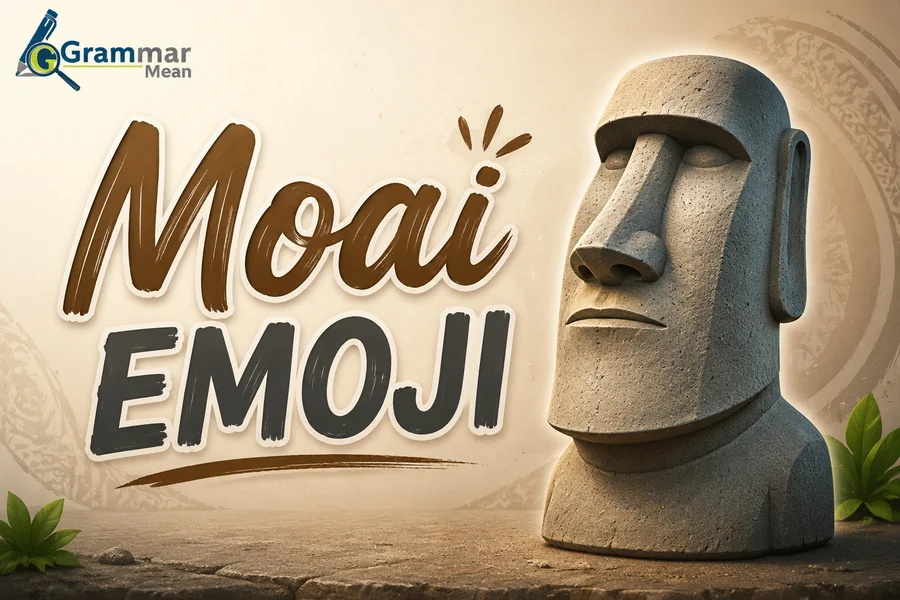
🗿 Moai Emoji: What It Actually Means (And Why It’s Everywhere)
You’ve likely seen a comment with just a one face male emoticon and nothing else. No words, just 🗿. Then you asked yourself, what does this REALLY mean?
This is the moai emoji. It’s gray, it has no expression and somehow it’s out there in comment sections right now as one of the most dropped emojis. This article explains where it originated, what it actually signifies in the present world and how to use it without sounding like you are shooting in the dark.
What Does the Moai Emoji Mean?
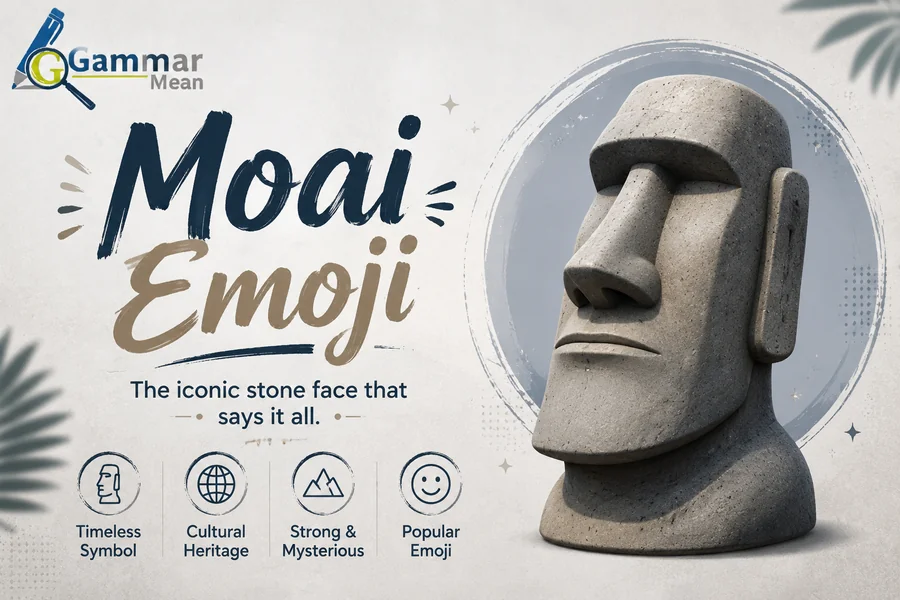
The moai emoji is simply an image of the actual stone statues created on Easter Island. Traditionally, it symbolizes power, lineage and a certain mystery.
But online? It has a different meaning most of the time. Users will respond to surprising, savage, or impracticable situations with 🗿. It’s like a “no comment” but without your being conscious of doing it.
Well that is the only attraction really! One symbol, two lives.
Fact Table: Moai Emoji at a Glance
| Fact | Meaning |
| Origin | Real stone statues from Easter Island (Rapa Nui) |
| Unicode Release Year | 2010 |
| Common Online Meaning | Silent reaction, approval, or “no comment” |
| Statue Height | Some exceed 30 feet |
| Statue Weight | Over 80 tons in some cases |
| Cultural Significance | Carved to honor ancestors and leaders |
| Popular Platforms | TikTok, X, Discord, Instagram |
| Typical Tone | Deadpan, teasing, or respectful |
Where Did the Moai Emoji Actually Come From?
The first moai statues date back to centuries. These were created by people called Rapa Nui between 1250 and 1500 CE, on Easter Island, far off in the Pacific Ocean. They were each dedicated to an ancestor or a tribal chief. There are some of these that are huge — more than 30 feet tall, more than 80 tons. These were hand-carved.
The emoji version was released to Unicode back in 2010, and began appearing on phones around 2015. For some time it was not used by anyone in particular. It simply sat there collecting dust on the emoji keyboard. It was picked up by the internet culture, and things changed quickly as a result.
Why Is the Moai Emoji Suddenly So Popular?
The short answer is that it turned out to be the ideal method to respond without typing.
Users began posting 🗿 under situations that were clunky or funny or… just a little too real. It’s like a silent nod. Sometimes it’s respect. It’s like, “I’ve got no comment to make on that. Its definition changes depending on the object of the reply, which is the reason it became so popular so fast.
One emoji, a variety of emotions and no one gets it.
Social Media Snippet Table
| Platform | Example Use | What It Signals |
| TikTok | Commenting 🗿🗿🗿 on a wild caption | Shock, amused silence |
| X (Twitter) | Replying to a hot take with just 🗿 | Quiet disagreement or disbelief |
| Discord | Dropped after someone loses badly | Playful mockery, no hard feelings |
| Under a confident selfie | Respect or admiration | |
| Reply to a plot-twist comment | “Didn’t see that coming” |
How People Actually Use the Moai Emoji
- Reacting to a bold or savage comment
- Showing quiet approval without writing a whole reply
- Signaling “I’m staying out of this one”
- Standing in for a deadpan laugh
- Getting paired with sound clips in gaming and meme videos
You’ll notice none of these need an explanation. That’s kind of the point.
Short Answers
| Question | Short Answer |
| What does the moai emoji mean in texting? | Usually a silent reaction or approval toward something surprising. |
| Is the moai emoji based on Easter Island? | Yes, it represents the real moai statues from Rapa Nui. |
| What does 🗿 mean on TikTok? | A deadpan reaction, often used for bold or shocking content. |
| Why do people repeat the moai emoji? | Repeating it adds emphasis, almost like a group reaction. |
| How is the moai emoji used in memes? | Paired with sound clips to show a stone-faced, unbothered vibe. |
| Is the moai emoji ever an insult? | Rarely. It’s usually teasing, not meant to offend. |
When Should You Actually Use It?
If someone writes something bold or slightly too honest, one 🗿 will get better. Perfect for informal conversations and comments. Avoid using it in formal or work situations; it only has meaning in casual, internet-savvy situations. In the outside world, people see only a grey statue and go about their business.
A rule of thumb: If the words seem too much, then they are.
Final Thoughts
From being an ancient carving to one of the internet’s go-to silent reactions, the moai emoji has come a long way and that’s a weird evolution for a symbol to undergo. It communicates real history and pure meme energy at the same time. So next time if you see 🗿 in your comments you will know what it means!
FAQs:
Q: What platform first popularized the moai emoji trend?
It spread mainly through TikTok and Discord before jumping to X and Instagram comment sections.
Q: Can you use the moai emoji in a work email?
Not really. It’s a casual, internet-slang emoji, so it doesn’t fit professional or formal writing.
Q: What’s the difference between the moai emoji and a laughing emoji?
The moai emoji shows a silent, deadpan reaction, while laughing emojis show an active emotional response.
Q: Is there an official name for the moai emoji?
Yes, its official Unicode name is simply “Moai,” referencing the Easter Island statues directly.
Q: Do the real moai statues have bodies?
Yes, most have buried torsos. Only the heads are visible above ground, which is why people assume they’re just heads.
Q: Why do people compare someone’s face to the moai emoji?
It’s a joke about having a blank, unreadable expression, similar to the stone-faced statues themselves.
Q: Is the moai emoji available on all devices?
Yes, it’s part of standard Unicode emoji sets, so it displays on iOS, Android, and most messaging apps.