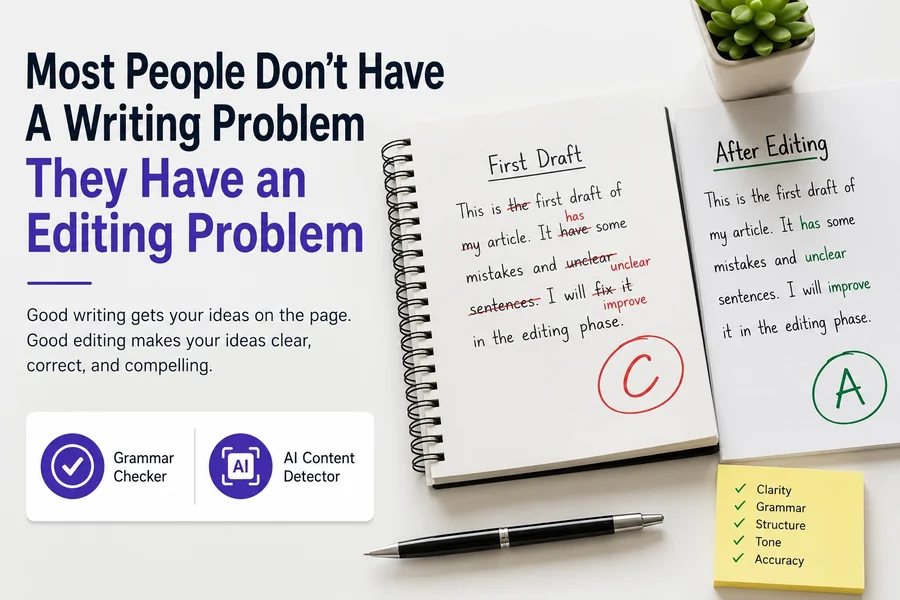
Most People Don’t Have a Writing Problem They Have an Editing Problem
Every day, millions of people write emails, blog posts, reports, assignments, proposals, and social media posts. Many assume that better writing comes from finding the perfect words on the first attempt. In reality, strong writing is the result of effective editing. Whether you write from scratch or use AI to create a first draft, reviewing your work with a grammar checker helps eliminate language errors and improve clarity. If you’ve used AI during the writing process, an AI detector can also help you evaluate AI-assisted text before publishing. The difference between average content and exceptional content is rarely the first draft. It is the editing that follows.
Writing and Editing Are Two Different Skills
Writing is about getting your ideas onto the page. Editing is about making those ideas easier to understand.
Trying to perfect every sentence while writing often slows your progress and interrupts your creativity. That’s why experienced writers usually separate writing from editing. They focus on completing the first draft before improving it.
Once the ideas are in place, editing helps organize them into a polished piece that readers can easily follow.
Editing Does More Than Fix Grammar
Many people think editing simply means correcting spelling mistakes and punctuation. While those are important, editing has a much broader purpose.
A thorough review helps you:
- Remove unnecessary words
- Improve sentence flow
- Eliminate repetition
- Strengthen weak arguments
- Improve readability
- Organize information logically
- Maintain a consistent tone
These improvements make your content easier to read and more enjoyable to consume.
Readers Care About Clarity
Readers rarely notice perfect grammar, but they immediately notice confusing writing.
Long sentences, unnecessary jargon, and poorly organized ideas make readers work harder to understand your message. In many cases, they simply stop reading.
Clear writing keeps readers engaged because it respects their time. Good editing helps simplify complicated ideas without removing their meaning.
Small Changes Often Have the Biggest Impact
Improving your writing doesn’t always require rewriting everything.
Simple edits can dramatically improve the quality of your content.
For example:
- Replace vague words with specific ones.
- Break long paragraphs into smaller sections.
- Remove repetitive phrases.
- Use descriptive headings.
- Read each sentence to ensure it adds value.
These small improvements create a smoother reading experience without changing your original message.
AI Makes Writing Faster, Not Finished
AI writing tools have made content creation significantly faster. They can generate outlines, summarize information, and even produce complete drafts within minutes.
However, speed should not be confused with quality.
AI-generated content may contain repetitive language, awkward transitions, inconsistent tone, or factual inaccuracies. Publishing content without reviewing it can affect both credibility and reader trust.
Instead of treating AI output as the final version, think of it as a starting point. Editing ensures the content reflects your voice, communicates your ideas clearly, and provides value to readers.
A Simple Editing Process Anyone Can Follow
You don’t need an advanced editing workflow to improve your writing.
Try following these steps:
- Finish your first draft before making corrections.
- Step away from the document for a few minutes.
- Read the content from the reader’s perspective.
- Improve the overall structure.
- Simplify long or confusing sentences.
- Check grammar, spelling, and punctuation.
- Verify facts, names, links, and data.
- Read the entire piece one final time before publishing.
Even spending an extra ten minutes reviewing your work can noticeably improve the final result.
Why Editing Is Worth the Effort
Well-edited content is easier to understand, more professional, and more likely to achieve its purpose.
Whether you’re writing for work, school, your business, or your personal blog, editing helps ensure your ideas are communicated clearly. It improves readability, builds trust, and leaves readers with a better impression of your work.
The next time you finish writing, don’t rush to publish. Spend a little more time editing. Your readers may never know how much work went into refining your content, but they’ll notice the difference in the final result.