Why RPL Certifications Are Popular Among Skilled Workers
Key Highlights
- RPL certifications help skilled workers turn work experience into a formal qualification through recognition of prior learning.
- The RPL process is popular because it can save time, reduce study, and support faster career progression.
- It opens job opportunities across Australia in trades, hospitality, automotive, community services, and more.
- Eligible applicants usually need relevant prior learning and evidence linked to industry standards.
- Employers value a nationally recognised outcome issued through a registered training organisation.
- Strong applications depend on clear documents, job records, and practical proof of skills.
Introduction
RPL certifications are becoming popular because many skilled workers have the necessary abilities but lack formal qualifications. In Australia, recognition of prior learning lets you have your existing skills assessed without repeating training you’ve already done on the job. This is valuable when seeking better job opportunities, stronger career prospects, or official recognition for your experience.
Understanding RPL Certifications in Australia

In Australia, recognition of prior learning is an assessment method that matches your prior learning, skills, and industry experience against units in a qualification. If your evidence meets the required benchmark, you can receive a nationally recognised qualification through a partner registered training organisation.
That is a big reason RPL certifications are popular among skilled workers in Australia. The RPL process focuses on what you can already do in real work settings, not on classroom attendance. For people with strong practical skills, it offers a direct and credible path forward.
What Is an RPL Certification and Who Is Eligible?
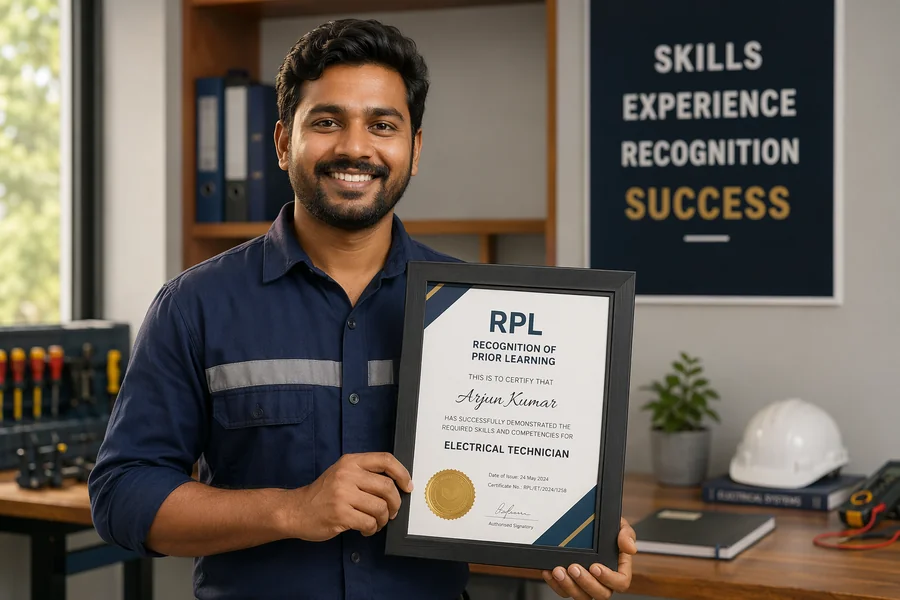
An RPL certification recognises your existing knowledge and work experience by assessing them against formal qualification requirements. Instead of starting from scratch, you use prior learning—gained through work, informal training, life experience, or previous study—to earn official recognition.
This is ideal for skilled workers who learned on the job but lack formal qualifications. Eligible candidates include experienced workers without credentials, migrants with overseas experience, tradespeople, supervisors, managers, and professionals needing certification for licensing, promotion, or compliance.
RPL is attractive because it aligns your real skills with industry standards. This can boost career advancement, improve job prospects, and increase your confidence in your current role or future opportunities.
The Recognition Process: How RPL Works for Skilled Workers
The RPL process begins with a skills check to match your experience with suitable qualifications. You then gather evidence of your competency in real workplace tasks.
A qualified assessor from a partner RTO reviews your work experience against nationally endorsed standards to determine if you meet the requirements for a nationally recognised qualification.
Key steps include:
- Completing an initial skills check
- Preparing a portfolio of documents, references, and proof of work
- Having your evidence assessed by an RTO assessor
Reasons Skilled Workers Prefer RPL Certifications
For many skilled workers, RPL is appealing because it values work experience. If you already meet the required standards, traditional education can seem unnecessary, slow, and costly.
RPL supports career advancement by helping you earn formal qualifications, enhance professional development, and boost your job market value. The next sections explain the two main reasons for choosing RPL.
Fast-Tracking Qualifications Without Traditional Study
Traditional study suits some, but isn’t ideal if you have years of industry experience. RPL certifications formally recognise your practical skills, eliminating the need to relearn what you already know.
This faster process is valuable for earning credentials needed for promotions, compliance, or new roles. Instead of months in classes, you prove your competency with evidence—a direct path based on your real-world performance.
For fields like carpentry, automotive, or commercial cookery, this offers a major advantage. Your existing knowledge can also count toward credit transfer or higher qualifications, reducing delays.
Cost Savings and Flexible Learning Options
Another reason skilled workers choose RPL certification is cost savings. By avoiding unnecessary repeated training and long absences from work, RPL offers a more affordable path to formal qualification.
Flexibility is another key benefit. Since the RPL process relies on evidence of your existing skills, you can usually keep working while preparing your documents. This makes it easier for professionals, business owners, and migrants balancing other commitments.
Support from a training organisation also simplifies the process. Skills Certified guides you on the required evidence and how to organise it, reducing confusion and helping you move forward with confidence.
Key Industries Benefiting from RPL Certifications
RPL certifications are valuable across many industries that require practical skills. They formally recognise on-the-job experience, aligning it with industry standards.
In Australia, this is especially important in sectors like construction, automotive, engineering, hospitality, plumbing, transport and logistics, and community services—where RPL has the greatest impact.
Popular Sectors: Construction, Hospitality, Automotive, and More
Some of the highest demand for RPL comes from construction, hospitality, and automotive, where skilled workers often gain industry experience before earning formal credentials. RPL bridges this gap by recognising real-world skills.
Skills Certified offers qualifications across various sectors, from Certificate III trade pathways to diplomas. This broad scope makes RPL valuable for technical, service, and supervisory roles.
| Industry | Example RPL Qualifications |
| Construction | Certificate III in Carpentry (CPC30220), Certificate IV in Building and Construction (CPC40120), Diploma of Building and Construction (CPC50220) |
| Hospitality | Certificate III in Commercial Cookery (SIT30821), Certificate IV in Kitchen Management (SIT40521) |
| Automotive | Certificate III in Automotive Electrical Technology (AUR30320), Certificate III in Light Vehicle Mechanical Technology (AUR30620) |
| Community Services | Career Development qualifications and related support pathways |
| Engineering | Certificate III in Engineering – Fabrication Trade (MEM31922), Certificate III in Engineering – Mechanical Trade (MEM30219) |
Essential Requirements for a Successful RPL Application
A strong RPL application begins with clearly matching your prior learning to the qualification requirements. Formal education isn’t always required, but you must provide evidence that your skills and knowledge are relevant to the assessed units.
The quality of your submission is crucial to the assessment process. Good preparation matters—understand the most accepted evidence types, as well as expected costs and timelines, before applying.
Types of Evidence Accepted for RPL Assessments
Your portfolio should demonstrate both depth and consistency. Assessors look for relevant work experience that aligns with qualification units and meets current industry standards. Strong documentation makes the skills assessment smoother.
Registered training organisations or support teams can advise on suitable evidence, especially if your experience spans multiple employers or overseas roles.
Common evidence includes:
- Work references and résumé detailing experience
- Job descriptions, duty statements, or employment records
- Training certificates, licenses, transcripts, or study documents
- Photos, videos, reports, or testimonials showing completed work
Common Costs, Fees, and Application Timelines
Yes, RPL certifications have associated costs and fees. Pricing varies by qualification level and payment structure, from Certificate II to Graduate Diploma. Your exact cost depends on the qualification you choose.
Timelines also vary based on how quickly you complete your application, submit evidence, and respond during assessment. RPL outcomes are often achieved much faster than traditional study paths.
| Factor | What to Expect |
| Costs | Varies by qualification level and payment structure |
| Qualification range | Certificate II to Graduate Diploma |
| Timeline factors | Speed of evidence submission and assessor review |
| Overall timeframe | Usually much faster than traditional study |
Conclusion
RPL certifications offer skilled workers a fast, flexible, and cost-effective way to advance their careers by recognising existing skills without traditional study. Major industries like construction, hospitality, and automotive benefit from this approach. Earning an RPL certification boosts employability and opens new opportunities. Contact us today for a free consultation to learn how RPL can work for you.
Frequently Asked Questions
Is RPL Certification Recognised by Employers Across Australia?
Yes. When issued through a registered training organisation, an RPL outcome is a nationally recognised qualification. That supports employer recognition across Australia because the RPL process assesses your skills against industry standards rather than informal claims alone.
How Can RPL Help Me Advance My Career as a Skilled Worker?
RPL supports career advancement by turning prior learning into formal credentials. For skilled workers, this can improve job opportunities, support promotions, strengthen professional development, and help meet licensing or workplace requirements without repeating training already learned on the job.
How Long Does It Take to Attain RPL Certification?
Application timelines vary based on your qualification requirements, the quality of your evidence, and how quickly the assessment process moves. In many cases, the RPL application process is much faster than traditional study, especially when your documents clearly show competency against current industry standards.