
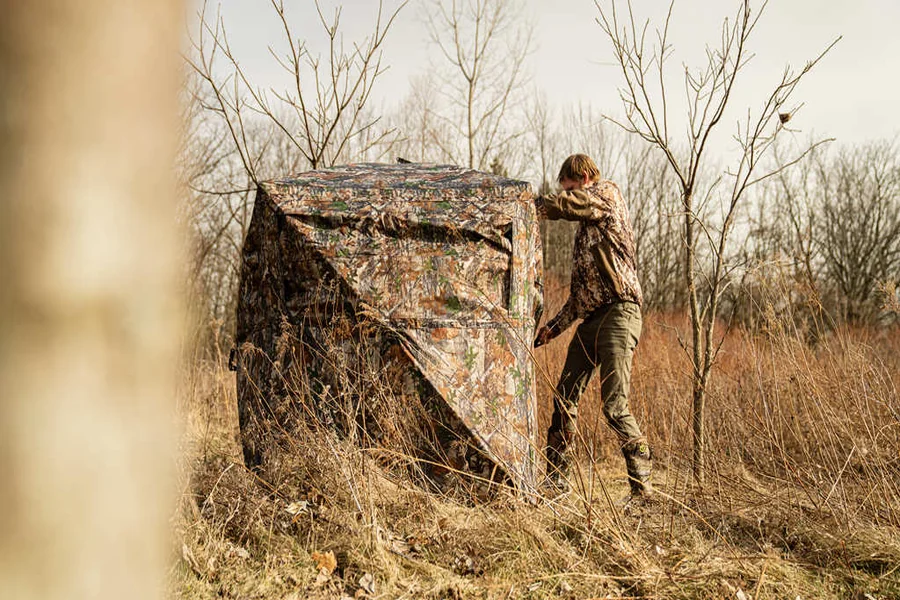
Setting Up a Hunting Blind for Maximum Concealment and Comfort
Owning a quality blind is only half the equation, and it’s often the easier half. How you set it up in the field matters just as much, if not more. Here’s a step-by-step approach.
- Scout before you place it. Look for signs of consistent animal activity — trails, feeding areas, bedding zones, or water access, depending on what you’re hunting. Too close to bedding areas and you’ll spook game before it’s in range; too far from travel corridors and you cut your odds altogether. Spending an extra afternoon scouting before committing to a spot almost always pays off more than rushing to set up on the first likely-looking location.
- Factor in wind direction. Most game relies heavily on scent to detect danger. Position the blind downwind of expected animal movement to dramatically improve your chances of staying undetected. Since wind direction can shift throughout a season, it’s worth having a backup location in mind for days when the prevailing wind doesn’t favor your primary spot, rather than hunting a compromised position out of convenience.
- Set up early. For ground blinds especially, placing the structure weeks ahead of season opener gives local wildlife time to grow accustomed to it as part of the landscape, rather than treating it as a sudden, suspicious new object. Animals that have passed the blind repeatedly without incident are far less likely to react to it once hunting activity actually begins.
- Brush it in. Surround the blind with natural vegetation from the immediate area — cut branches, grasses, or brush arranged around the base and sides. This does more for concealment than the blind’s built-in camo pattern alone, breaking up its outline against the surrounding terrain. Refreshing this brushing periodically, especially as cut vegetation dries out and changes color, keeps the blind blending in rather than gradually standing out.
- Manage the interior details.
- Keep windows and shooting ports covered until the moment they’re needed
- Favor a dark or matte interior surface to reduce light reflecting outward
- Add a quality chair or cushioned seat — comfort reduces fidgeting and noise during long sits
- Lay down a section of carpet or foam matting to muffle footsteps and equipment noise inside the blind
- Control your scent at every stage. Avoid excessive handling of the blind with bare, scented hands, and store gear in scent-reducing bags between hunts to minimize the human scent signature left at the site. This matters as much during setup and scouting trips as it does on an actual hunt, since scent left behind weeks in advance can still put wary game on alert.
- Maintain it through the season.
- Check regularly for wear
- Re-secure brushing material after wind or weather events
- Confirm shooting lanes stay clear as vegetation grows
- Inspect zippers, seams, and stakes periodically, since a blind that’s failing quietly in one of these areas often goes unnoticed until it causes a problem mid-hunt
For hunters building out a setup, Murdoch’s offers a range of hunting blinds and accessories suited to different terrain types, along with the supporting gear needed to brush in, outfit, and maintain a blind properly through the season.
A well-placed, properly maintained blind isn’t just more comfortable to hunt from — it’s a genuine tactical advantage that pays off in results, and most of that advantage comes down to the setup steps above rather than the blind itself. Two hunters with the identical blind model can have very different seasons depending entirely on how carefully they scouted the location, managed wind and scent, and maintained the setup as conditions changed. Treating placement and upkeep as seriously as the equipment itself is ultimately what separates a blind that consistently produces results from one that just sits in the field looking the part. It’s a small investment of extra time relative to the cost of the blind itself, and it’s usually the difference between a season of missed opportunities and one where the setup actually delivers.